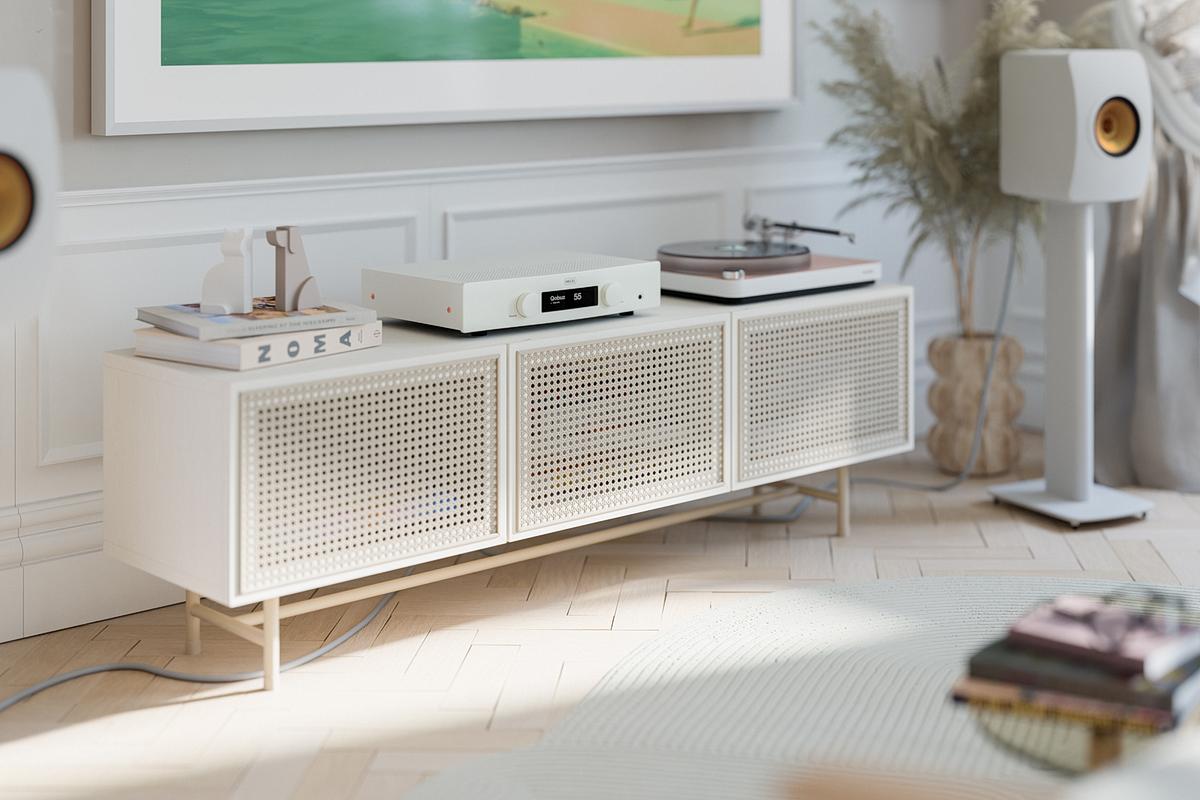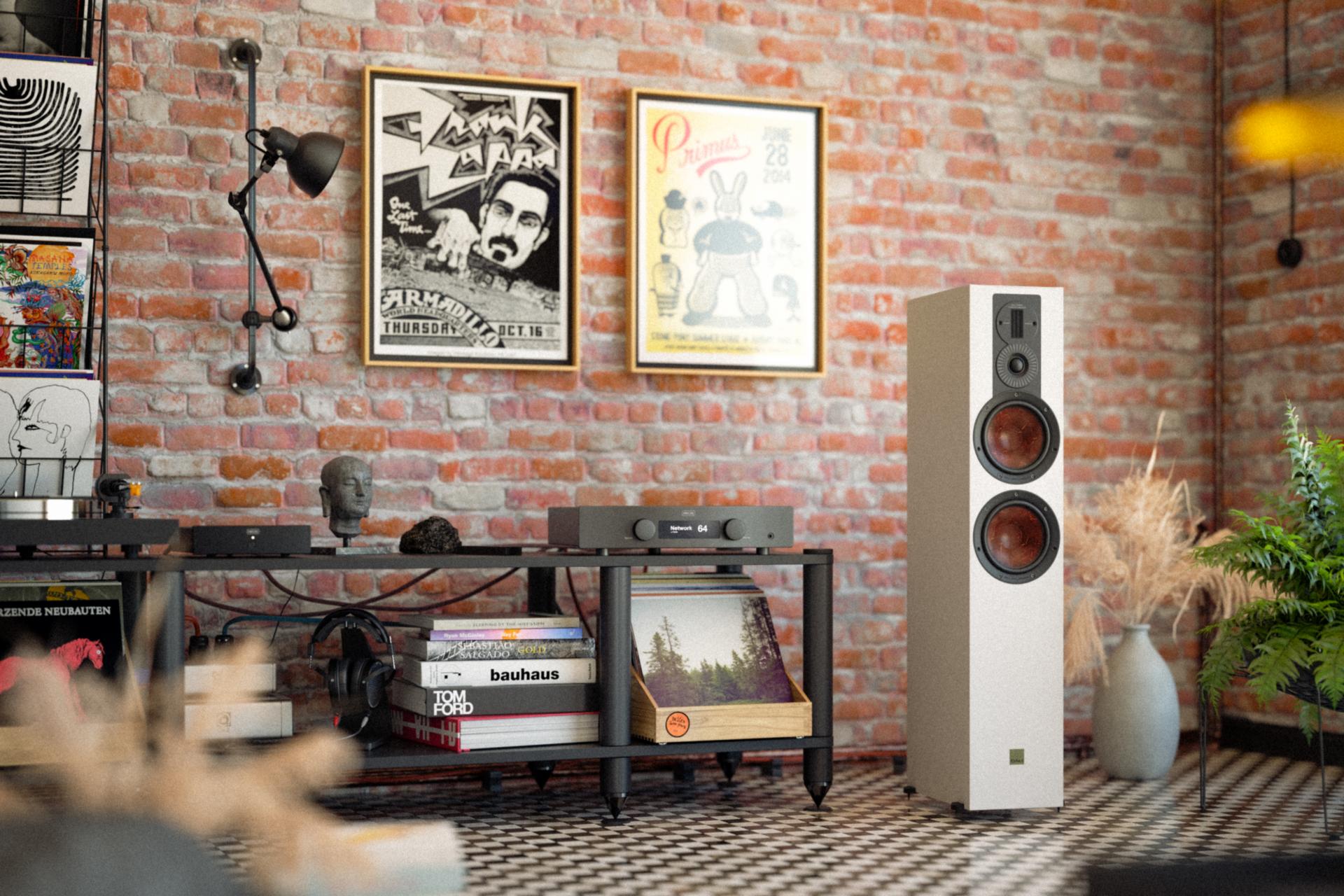
Most music lovers and audiophiles would probably agree on one thing without much debate - nothing shapes the character of a stereo system as strongly as the speakers. They are the component that turns electrical impulses into moving air, they interact directly with the room, and they play the biggest role in whether an evening listening session brings the joy we hoped for. At the same time, choosing speakers is often the point where many of us start to feel confused. A few hours of reading online, a handful of visits to audio stores, and suddenly it turns out that before you even look at specific brands and models, you have to get your head around basic concepts like sensitivity, impedance, sealed and ported enclosures, or the types of drivers used. On top of that comes matching speakers to the amplifier and to the size of the room. It's very easy to get lost in all these criteria, especially if you are putting together your first serious stereo system rather than simply making another upgrade in a long hi-fi journey.
Choosing loudspeakers is not just about making a decision that has to balance a lot of factors at once. It's also a choice that heavily determines our next steps and our future experience with building and improving a home hi-fi system. Even experienced audiophiles often find it hard to commit to a particular solution until they have heard it in action. Is a three-way design always better than a two-way? Is lower impedance good or bad? Do aluminum cones give us deeper bass than those made of paper or polypropylene? What exactly is a transmission line, a first-order crossover or a ferrofluid-cooled dome? Should you go for floorstanding or stand-mount speakers? How many drivers should they have? Which enclosure type will be best? The sheer variety of models on the market does not make things easier. In the maze of different cabinet designs, specifications, brands and engineering philosophies, it's easy to lose track. And yet, with a bit of patience, you can get through all of this and end up with speakers that feel like they were made for you.
Let the task define the system
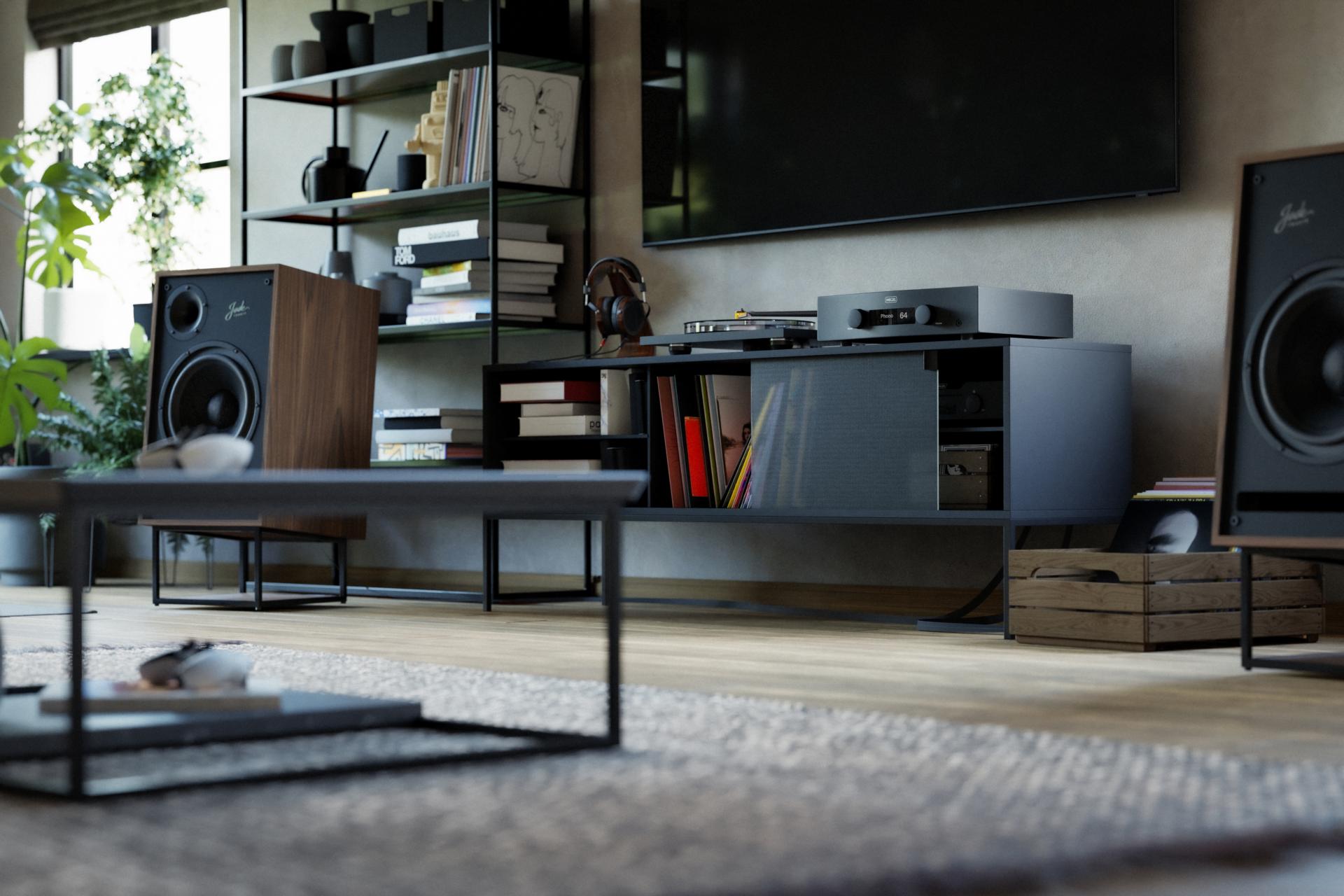
Before you start looking at beautiful speakers that could become the centerpiece of your living room, it's worth doing something far less glamorous but extremely useful. You can sit down in the place where you normally listen to music and try to answer, honestly, a few simple questions. Is this system mainly for focused listening from a favorite chair, or is it supposed to do a bit of everything - movies, games, background music while you go about your day? Do you tend to listen mostly in the evening when the house is quiet, or during the day when someone is cooking in the kitchen, kids are running around, and the system has to cope with intimate jazz and boomy soundtracks in the same afternoon? Are you aiming for a classic stereo setup, or do you already hear a voice in the back of your mind whispering about a home theater with a big subwoofer, center channel and surround speakers? Are there any extra constraints, such as the need to match the finish of the speakers to the interior design of your living room? What kind of sound are you really after? What is the budget, and how far can you realistically stretch it?
Once you have at least provisional answers to these questions, it becomes much easier to move through the next stages and narrow down the field. For some people this may sound obvious, but in practice many of us never really clarify these things for ourselves, and when similar questions pop up at the store, they create unnecessary stress. Every pair of speakers suggested by the salesperson suddenly seems equally good - or equally wrong. In short, it pays to start with the conditions you have and the job you expect your new speakers to do.
What kind of sound do you like, sir?
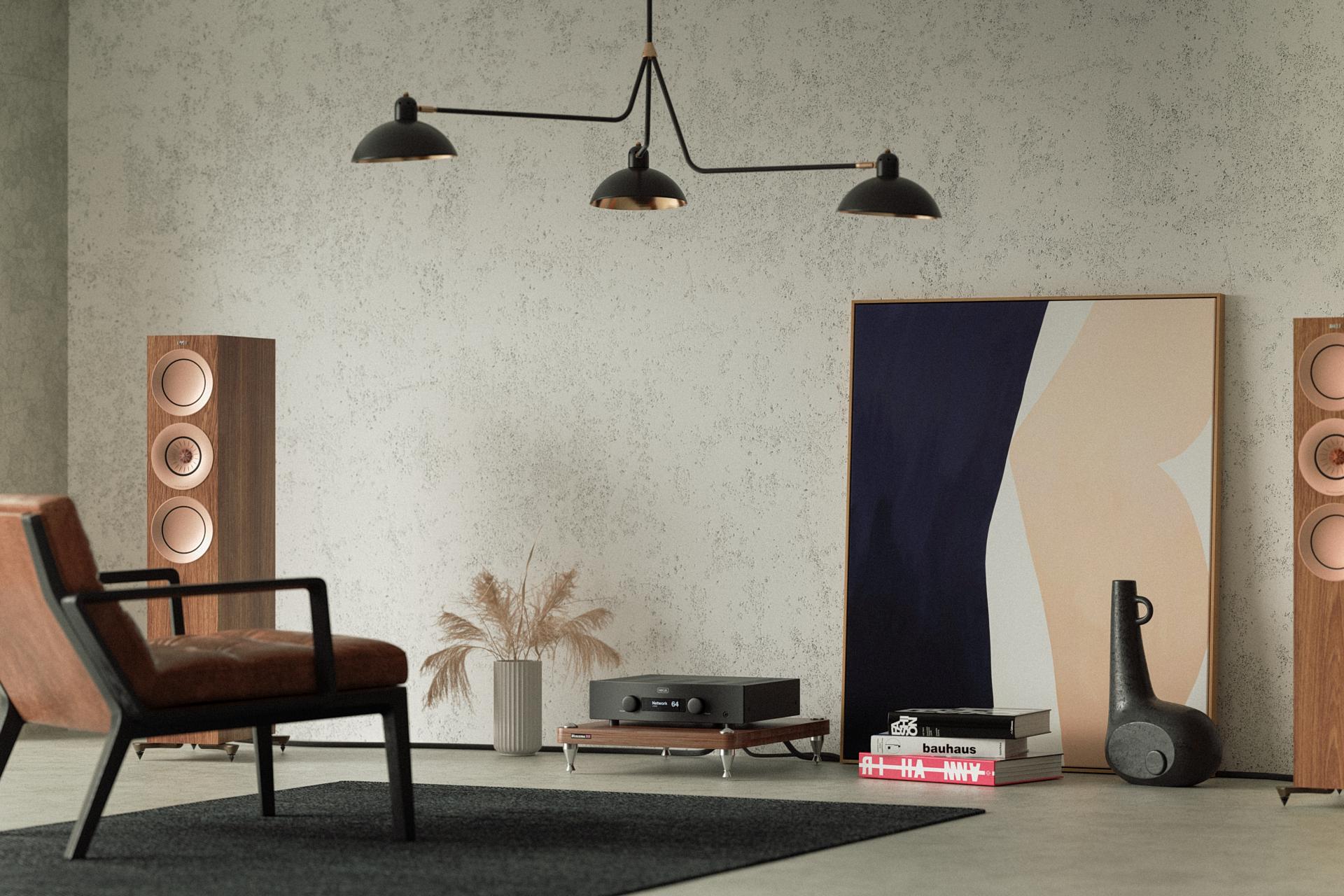
The second key issue is the kind of sound you are looking for. Saying it should be "nice" or "good" is not enough. It's best to describe it in your own words. Is a smooth, unobtrusive treble more important to you, or do you prefer clarity and sparkle that lets you hear every nuance? Do you like bass with a hint of warmth and weight, or rather something tight, fast and perfectly on time even with hard-hitting electronic music? Do you enjoy having the vocalist right in front of you, almost "in the room", or do you prefer a bit more distance and the feeling that you are sitting a few rows further back?
This is where many newcomers run into a basic problem - a lack of experience, reference points and awareness of their own sonic preferences. People who are about to buy their first serious stereo often compare what they hear to soundbars, wireless headphones or car audio systems, because that is what they know. The truth is that mass-market gear is usually tuned to appeal to as many people as possible. It may not offend anyone, but it also does not show how wide the spectrum of sound can be in "serious hi-fi". Someone who has eaten fries, pizza and burgers all their life may have no idea that what they truly love is sushi or very spicy chicken madras.
If you are not sure what kind of sound you like, the best solution is to book a listening session at a specialist dealer and ask to hear systems that represent very different, even extreme, approaches. You may discover that you love sound that is warm and relaxing, fast and analytical, or as neutral as possible. Defining your preferences shifts the question from "are these speakers any good?" to "do these speakers sound the way I want?". That's why at Hegel we place such importance on the selection of our distributors and dealers. We collaborate with the most experienced people in the industry so that you can be sure that wherever you find our equipment, the retailer will allow you to try it out with a range of very interesting speakers.
The room - the most important "component" in the system
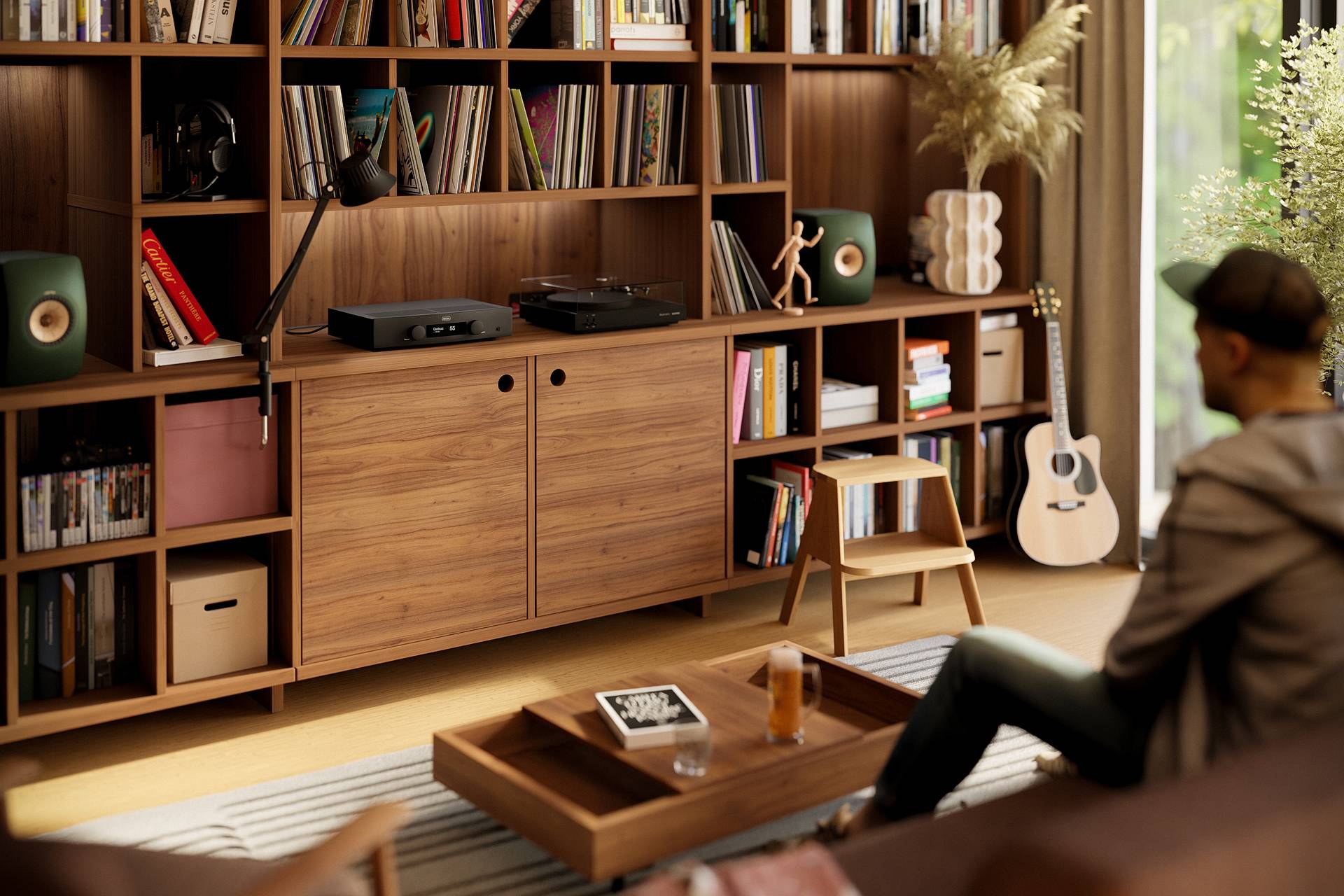
We can spend hours talking about sources, cables and driver materials, but in practice the room acts as the biggest "accessory" in the entire system. The same pair of speakers will sound very different in a small square room with bare walls and laminate flooring than in a spacious rectangular living room where one wall is lined with bookshelves, there is a thick rug on the floor and heavy curtains over the windows. In the first case, bass will tend to boom and high-frequency reflections can be sharp and fatiguing. In the second, the sound should be naturally tamed and easier to control, although it may sometimes feel a bit darker or more subdued. The positioning of the speakers, the distance from the walls and where we sit while listening to music, as well as whether our room is relatively empty or cluttered with furniture and decorations - all of this has a direct impact on whether a given type of speaker even makes sense.
In very simple terms, in smaller rooms it is easier to keep things under control with good stand-mount speakers or slim floorstanders that do not flood the space with bass, while larger living rooms naturally "ask for" bigger cabinets and larger bass drivers. Putting oversized speakers into a small room is quite risky. In a confined space, large floorstanding speakers simply will not perform properly. Trying to cheat physics can end with boomy low frequencies, poor imaging and compressed dynamics. It is possible to tame such a system, but it is hard work. Many listeners, however, assume that "bigger speakers = bigger sound" and, since some space on the floor has to be sacrificed anyway, they might as well go big. Sometimes it works, but often it just doesn't.
The final result is influenced by many other factors - the shape of the room, the amount and type of soft furnishings, even what the walls, floor and ceiling are made of. That is why the ultimate test is a listening session at home - in an environment that cannot be perfectly replicated anywhere else.
The opposite situation looks safer on paper but can also lead to underwhelming results. If you put tiny speakers in a huge living room, you can expect a lack of low bass and a sense that the room is not really filled with sound. Covering a large space properly usually requires sizeable speakers and a suitably powerful amplifier. Of course, it increases the overall cost of the system, but pretending the problem doesn't exist often leads to buying speakers that are simply too small, and selling them as soon as you realize you've made a mistake.
To avoid this, it is worth defining the general size category you should be looking at right away. A useful rule of thumb is that larger rooms are easier to fill with sound using floorstanding speakers, while in smaller spaces stand-mounts often work best and can be surprisingly capable despite their modest size. The final result is influenced by many other factors - the shape of the room, the amount and type of soft furnishings, even what the walls, floor and ceiling are made of. That is why the ultimate test is a listening session at home - in an environment that cannot be perfectly replicated anywhere else. This is also one of the reasons why we design Hegel amplifiers with high current capability and strong control over the speakers. A stable amplifier makes it much easier to adapt a system to real-world rooms rather than ideal laboratory conditions. Knowing the limits and possibilities of your room naturally leads to another practical question - where exactly should the speakers be placed to perform at their best?
Speaker placement in a nutshell
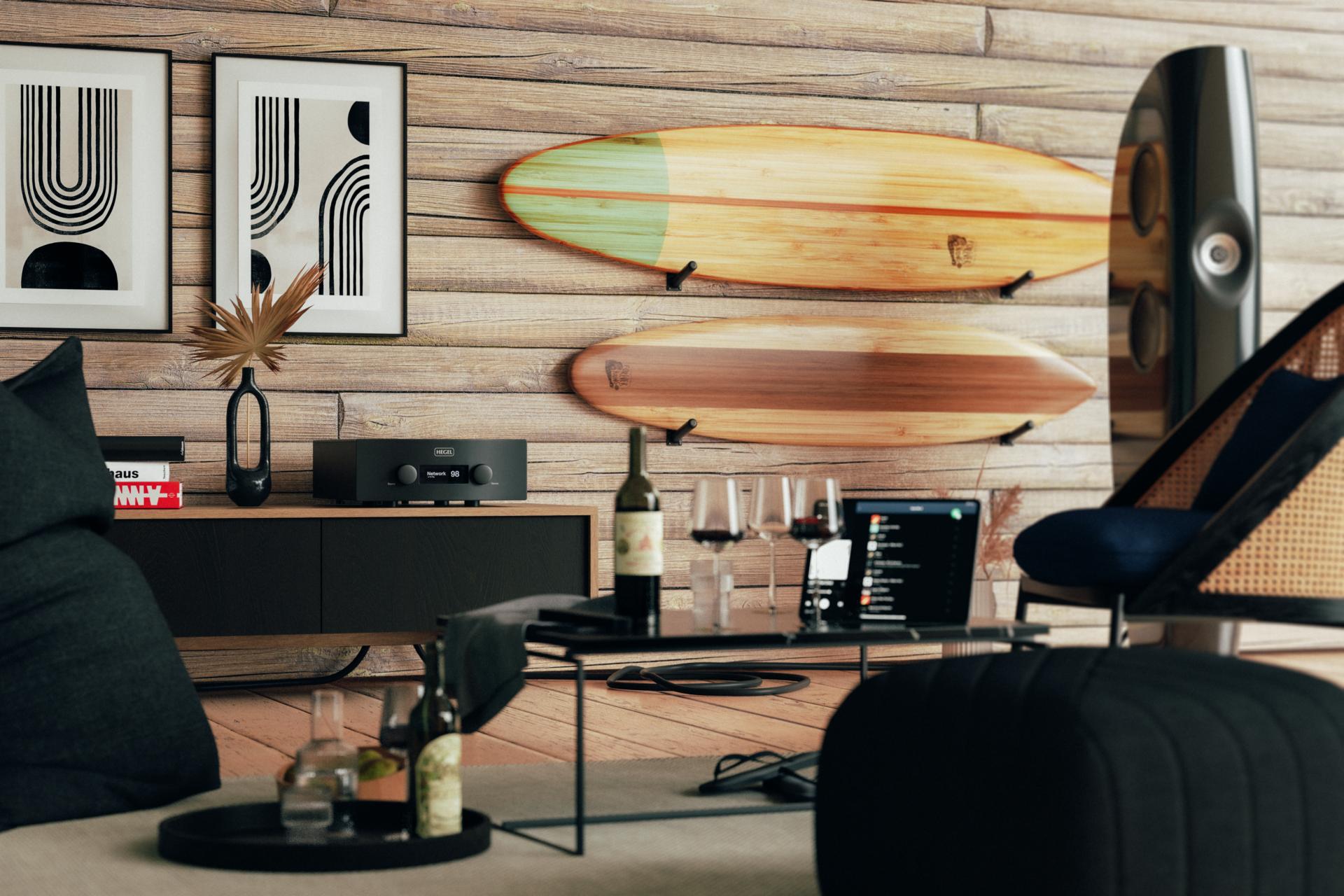
Proper speaker placement is an incredibly important part of the puzzle. This topic is worth devoting a separate article to, but for now let us focus on the basics. There are a few rules that appear again and again in the manuals of many loudspeaker manufacturers. The most important one concerns geometry. The speakers and the listening position should form something close to an equilateral triangle, which means the distance between the speakers should be roughly similar to the distance from each of them to your head. This kind of layout usually delivers the most natural stereo image and the most stable centre focus. It is also worth making sure that the conditions on the left and right side are as similar as possible, because room asymmetry can lead to a shifted and blurred stereo image.
The second issue is the distance from the walls. A popular and safe starting point is 30-50 cm from the rear wall, but many guides suggest an even greater gap, especially with rear-ported designs. The idea is to avoid excessive bass reinforcement and unwanted boom. It is also wise not to place the speakers directly in the corners, and to make sure that the distance from the rear wall is not exactly the same as the distance from the side wall, as this can intensify problems with reflections and colouration. The tweeters should sit roughly at ear level in the listening position, which is why stand-mount speakers are best placed on properly chosen stands rather than on random pieces of furniture.
Finally, there is toe-in. In most cases, it is worth angling the speakers slightly towards the listener, so that from the listening seat you can see a little of their inner side panels. This will usually improve focus and make it easier to follow the placement of instruments and voices on the soundstage. Still, there is no need to overdo it. Some manufacturers explicitly point out that aggressive toe-in is unnecessary, and that the best results often come from small, careful adjustments made during the listening. In other words, treat the manufacturer's recommendation as a solid foundation, then experiment with a few centimeters forward or back and a few degrees of rotation. In the world of stereo, that is very often how the best results are found. Once placement basics are clear, it becomes easier to look at how the speakers themselves are built and why enclosure design plays such an important role in their behavior.
Cabinet type and how it shapes the sound
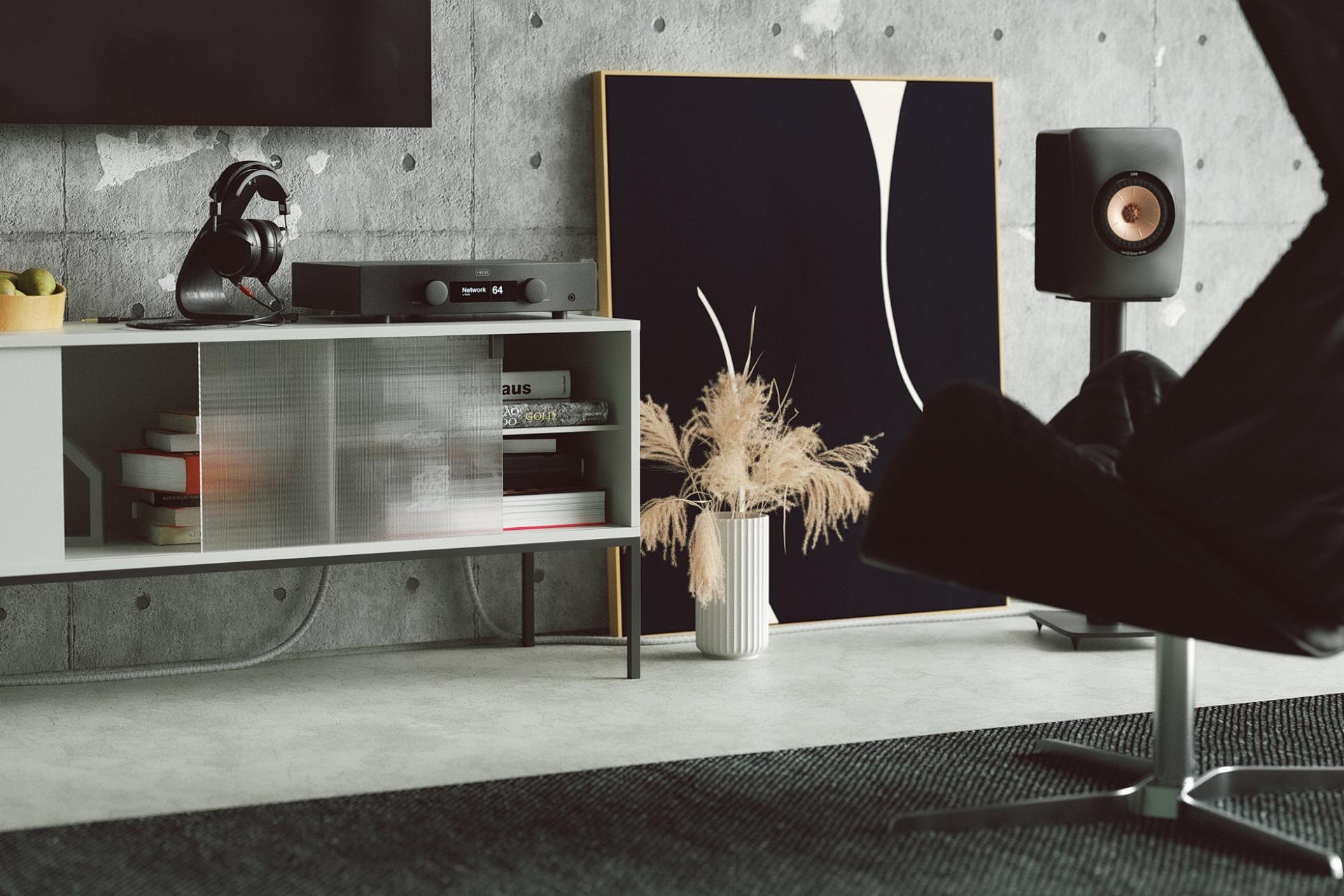
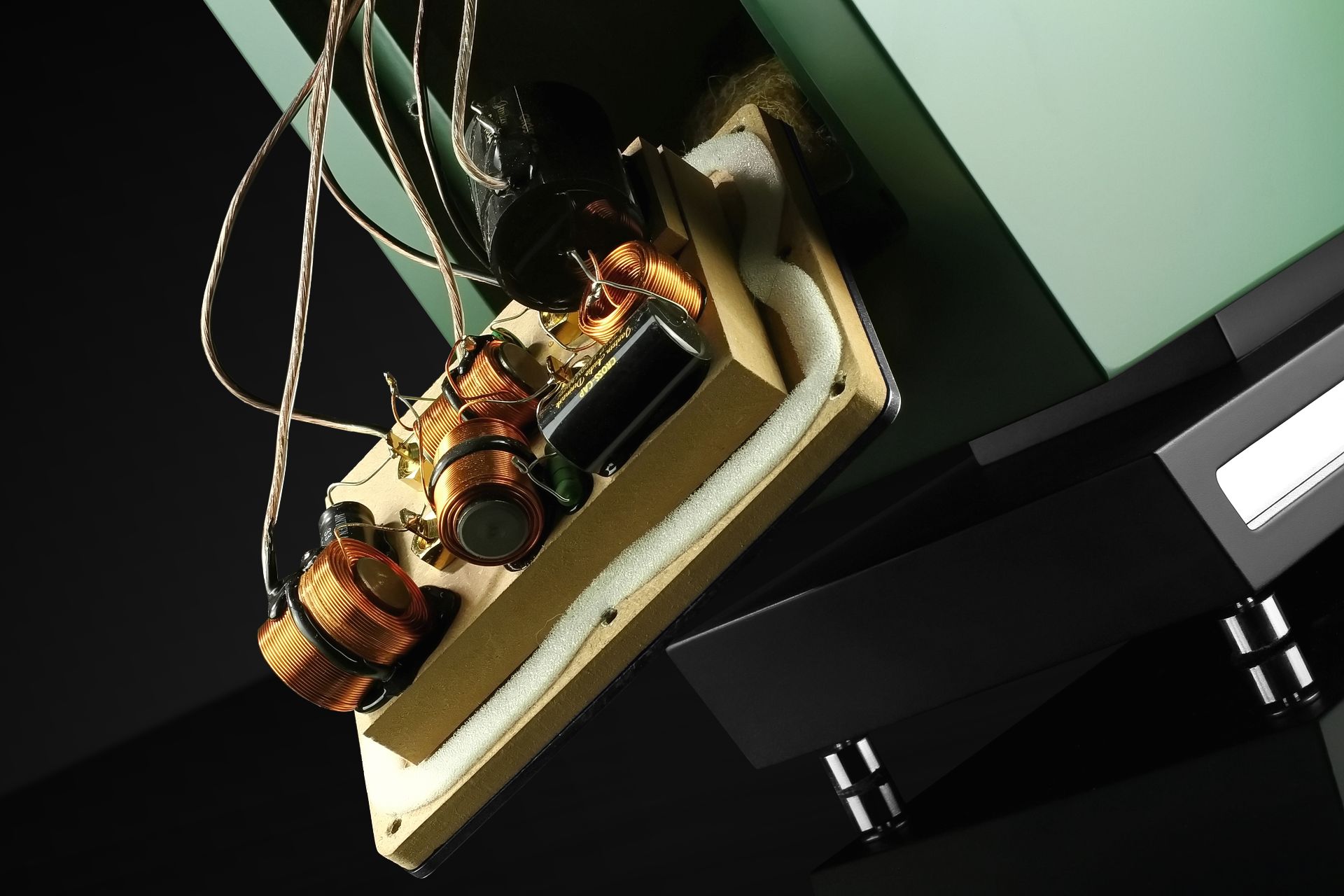
Many audiophiles believe that the enclosure type largely determines how a loudspeaker behaves and how it couples with the room. If we imagine using exactly the same drivers and crossover in a sealed box, in a vented box or simply mounted on a flat baffle, it's not hard to picture how different the results would be. That is why the choice of cabinet type matters so much. When it comes to the cabinet itself, most manufacturers agree that it should be as heavy, rigid and non-resonant as reasonably possible. That is why most speakers on the market use MDF, solid wood or laminated plywood. In more expensive designs we start to see elements made of stone, metal, glass, concrete, composites or other exotic materials. This is not the only valid approach, though. Some companies deliberately design their cabinets to "sing along" with the drivers in a controlled way, almost like a musical instrument's soundbox. As is so often the case in this world, there is no single sacred design principle that everyone follows without question.
The most popular enclosure type is the bass-reflex or ported cabinet - essentially a box with at least one vent or port. The moving air inside the cabinet is coupled to the room through the port, which also introduces its own resonance determined by its length and diameter. This allows for deeper bass extension from a relatively compact enclosure. The main drawback is that the port output boosts certain low frequencies, which, when combined with room modes, can result in unpleasant boom. Another downside is that the port's position often limits how close you can place the speakers to the walls. Rear-firing ports in particular usually don't like being pushed right up against the back wall. That is why many manufacturers are looking to other solutions, and when they do use ports, they design them to minimize turbulence and keep airflow as smooth as possible.
A popular alternative is the passive radiator. It's essentially a driver without a voice coil and magnet - just a diaphragm that moves in response to pressure changes inside the cabinet, behaving somewhat like the air in a bass-reflex port. This approach is common in wireless speakers and soundbars because, like a ported enclosure, it allows for surprisingly deep bass from a relatively small box. The biggest drawback is that the passive radiator typically moves in opposite phase to the woofer. When the woofer's cone moves out, the passive radiator moves in, and vice versa. This can reduce bass speed and "punch". On the other hand, two or three moving surfaces can shift more air than one, and a well-designed passive radiator system can minimize the downsides.
Interested? Check out another guide on our blog: Buying a stereo system.
If you have space for larger cabinets, a small room that tends to exaggerate bass, or if you simply belong to the camp of purists who do not like any tricks with frequency response, you might look at sealed enclosures. These are boxes with no ports or passive radiators at all. The sound we hear comes only from the drivers themselves, not from any supplementary openings or diaphragms. Sealed boxes offer a smooth, predictable frequency response and very good transient behavior. The price you pay is efficiency. To get truly deep bass from a sealed enclosure, you usually need a large cabinet, a suitably big woofer and a powerful amplifier. With a neutral amplifier that does not exaggerate any particular frequency range, differences between enclosure types become easier to recognize, helping listeners focus on the character that best suits their room and preferences.
Speaker designers are extremely creative, and when it comes to tuning enclosures, one strategy is worth mentioning. It's called transmission line or labyrinth enclosure. This is usually a long folded tunnel built into the cabinet itself. It starts right behind the driver and often runs the full height of the enclosure, bending several times along the way. Many audiophiles feel that a properly executed transmission-line design can combine some of the benefits of sealed and ported boxes - the smooth response of the former with the depth of the latter. The catch is that transmission lines are extremely sensitive to the type and amount of damping material inside, and the exact shape of the line has to be carefully calculated to match the driver's parameters. Designing such a cabinet is labor-intensive, and building it is not trivial either. Even so, quite a few companies have taken on the challenge with very good results.
Given how complex cabinet tuning can get, you might be tempted to ask whether the best solution is to skip the cabinet altogether. As it turns out, that is also possible. There are several types of "boxless" speakers. The simplest idea is to mount the drivers on a flat surface - these are so-called open baffles. Counter-intuitive as it may seem, this is not a silly concept. Some people swear by the smoothness and agility that open baffle speakers can deliver. The trade-off is that we usually need large woofers and careful placement in the room. Such speakers are dipoles - they radiate sound to the front and to the rear. For the same reason, electrostatic and magnetostatic speakers, as well as some large ribbon designs, are also natural dipoles. Because they radiate sound in both directions, their owners often need to rethink the whole listening room, carry out at least some acoustic treatment or at minimum move furniture around to find the right balance of frequency response and stereo imaging.
Watts, ohms, decibels - do they really matter?
The electrical parameters of a speaker are a crucial part of the decision-making process. They determine whether a given pair will work well with your amplifier and have a direct impact on how loud the system can play and how easily it can fill the room with sound. Many newcomers focus first and foremost on power ratings. For more experienced audiophiles this can be puzzling, because in loudspeakers power is nowhere near as important as it is in amplifiers. We could almost say it is one of the least useful numbers. Quite a few manufacturers do not publish it at all. For reasons that are not entirely clear, many people remain very attached to wattage. Let us say it clearly - speakers are not vacuum cleaners, and there are other parameters that matter far more. Wattage is specified to not harm the speaker, but the truth is that the speaker can be damaged just as easily or more easily with a small amp that can't handle the load. Yes, you got it right - a higher-power amplifier may be safer for your speakers because it won't go into clipping (a form of distortion that occurs when an amplifier is overdriven and attempts to deliver an output voltage or current beyond its maximum capability) as quickly. But that's a topic for another post.
The first key parameter is impedance, measured in ohms (Ω). It tells us very little about the "quality" of a speaker in the audiophile sense, but it is critically important for matching a speaker to an amplifier. Manufacturers usually quote a nominal impedance, which is essentially an average of the drivers' impedance curves. The most common nominal values are 4, 6 and 8 ohms. In reality, though, impedance is not fixed - it varies with frequency. It's a bit like diving, where water pressure changes with depth. Going down a few meters isn't a problem, but then it starts to get tough, and eventually you have to accept that you can't manage without specialized equipment. The bass is often decisive because reproducing low frequencies demands the most current from the amplifier. Why do you need to care? If you look at the spec sheet for a typical amplifier, you will usually see two power figures - one for 8 Ω and one for 4 Ω. Lower impedance speakers draw more power from the amplifier - but only if the amplifier is capable of supplying it. An amplifier designed to be stable into low impedances will simply do its job. One with a small power supply and limited current capability will start to struggle. In practice this means that bass control is lost and the system stops sounding relaxed and effortless. That is why we at Hegel build our amplifiers with oversized power supplies based on large toroidal transformers. Combined with high output power, a high damping factor and our SoundEngine technology, this on-board "power plant" ensures that the amplifier can drive real-world speakers even in their most demanding moments.
Every amplifier in our lineup is a solid-state design with high or very high power output, excellent speaker control and the ability to work with the vast majority of sensibly designed speakers. Even our most affordable integrated amps deliver 60-80 watts per channel, which is more than enough in most typical scenarios with speakers in the 85-90 dB range. Higher-end models offer 150, 250 or even 300 watts per channel into 8 ohms, which is enough even for very demanding high-end loudspeakers.
The second key parameter is sensitivity, sometimes called efficiency, given in decibels (dB). This is simply the sound pressure level that a speaker can generate in specified conditions. Most speakers on the market fall somewhere around 87-89 dB. Models with sensitivity in the 80-85 dB range are considered more difficult to drive and tend to benefit from more powerful amplification. Owners of low-power tube amps often choose speakers with 92-94 dB sensitivity. In some horn or otherwise specialized designs, sensitivity can even exceed 100 dB. It's important to remember that the decibel scale is logarithmic. The numbers can be deceptive. A difference between 87 and 90 dB might look small, but in terms of sound pressure it is a doubling. Every 3 dB increase corresponds to twice the acoustic intensity. Around 90 dB is roughly what we experience standing near a sports car as it accelerates. 110 dB is in thunderstorm territory, and 120 dB is what we might measure at a rock concert (hopefully you brought earplugs) . At that level most of us already feel physical discomfort. So if you start worrying that 87 dB might not be enough - it absolutely is. The dB rating is taken at 1 Watt input, 1 meter away from the speaker. In your room, you will probably sit further away from the speakers, but you will also have a much more powerful amplifier. In such conditions, the volume expressed in decibels will significantly exceed the efficiency value specified by the manufacturer. Unless you have a very weak amplifier and are trying to fill an airplane factory with sound, this parameter is rarely the limiting factor.
Is sensitivity important for owners of Hegel amplifiers? Honestly, not really. Every amplifier in our lineup is a solid-state design with high or very high power output, excellent speaker control and the ability to work with the vast majority of sensibly designed speakers. Even our most affordable integrated amps deliver 60-80 watts per channel, which is more than enough in most typical scenarios with speakers in the 85-90 dB range. Higher-end models offer 150, 250 or even 300 watts per channel into 8 ohms, which is enough even for very demanding high-end loudspeakers. We did not pursue these power and current capabilities just for the sake of the numbers. A big part of the reasoning was to give our users as much freedom as possible when choosing speakers. If we know that our amplifier will drive almost anything, we can focus on choosing speakers we like, without worrying whether their sensitivity is 86, 89 or 92 dB.
Should you pay attention to any other specs when choosing speakers? Yes. One of the most important is frequency response - the range of frequencies a speaker can reproduce. The upper limit is rarely a problem these days. Most modern speakers easily exceed the nominal 20 kHz limit of human hearing. Even fairly affordable tweeters can reach such frequencies. Whether our ears can still hear that high is another question. As we age, our hearing naturally rolls off, and many of us do not hear much above 16-18 kHz. The bass is a different story. Our hearing in the low end does not degrade as quickly, but common loudspeakers often struggle to get anywhere near the "magic" 20 Hz. To reproduce such deep bass, we need really large woofers and a powerful amplifier. Most manufacturers quote low-frequency limits in the 35-60 Hz range and high-frequency limits in the 20-30 kHz range. When you look at these numbers, you have to pay attention to the tolerance used for the measurement. Most companies quote frequency response with a 3 dB tolerance. If you see "40 Hz", it means the 40 Hz tone will already be around 3 dB quieter than the midband average - in other words, about half as loud. If one wants to massage the numbers a bit, they can publish any numbers they like without telling us the tolerance or they can quietly use a 6 or 10 dB window.
Unfortunately, no matter how honest a manufacturer is, those two numbers tell us very little about how a speaker actually sounds. To get a useful picture of its tonal balance, we would need the full frequency response graph, and very few companies publish that. It is a pity, because quoting just the endpoints is a bit like describing a road trip from Stavanger to Trondheim only by saying where we started and where we ended. We can take the southern route along the coast to Oslo and then drive north, or pick a longer but far more scenic route that takes us through Bergen, past fjords, islands and mountain ranges, and even through Jotunheimen and Rondane national parks, with a detour near Norway's highest peak, Galdhøpiggen. The start and end points are the same, but the experience is completely different. The bottom line is that you should treat frequency response as a clue, not as absolute truth. If a manufacturer openly states that the tweeter rolls off at 14-16 kHz, you can assume that some air and sparkle might be missing. If the lower limit is 70-80 Hz, you should not expect deep bass and may need a subwoofer. If the stated range is wide, say from 30-45 Hz to well above 20 kHz, it's an encouraging sign - but we still do not know what happens in between. To find out, we either need detailed measurements or, more realistically, a listening session.
Read more about the SoundEngine technology here.
Everyday life and practical details
By the time your shortlist has shrunk to a handful of models, a different set of criteria tends to move to the foreground - things that are easy to ignore at the beginning but that matter immensely in everyday life. Brochures and reviews talk mostly about sound, specs and technology. In a real home, speakers have to coexist peacefully with the rest of your life. If there are kids, a cat, a dog, or just a small living room where everything is close together, things like grille mounting, cabinet stability and how easy it is to bump into a speaker suddenly become very relevant. Grilles stop being purely decorative and become the first line of defense against curious fingers and claws. It is worth checking how securely they attach, whether they really protect the drivers or are more of a cosmetic accessory destined for the attic or basement.
Cabinet stability is just as important. Stand-mount speakers should ideally be used on heavy, stable stands. Many companies offer dedicated stands designed specifically for their speakers, and these often turn out to be the best - or even the only sensible - option. Floorstanders come with very different placement solutions. Some have spikes or feet that screw directly into the base of the cabinet. Others are supplied with stabilizing plinths or outrigger feet that extend beyond the cabinet footprint and make it much harder to tip the speaker over. A fall can end badly not only for the speaker, which may end up with badly damaged cabinets or even broken magnets, but also for anyone unlucky enough to be in the path of a falling tower. The way the spikes or feet can be adjusted also matters more than one might think. Well-designed plinths, feet that extend beyond the cabinet and a sensible spike adjustment system can make it much easier to position and level the speakers correctly. Poorly thought-out feet can turn a simple adjustment into a frustrating wrestling match.
At Hegel, we pay close attention not only to the technical and sound quality of our equipment, but also to its practicality and visual appeal. Find out more: Scandinavian design - what it means to Hegel.
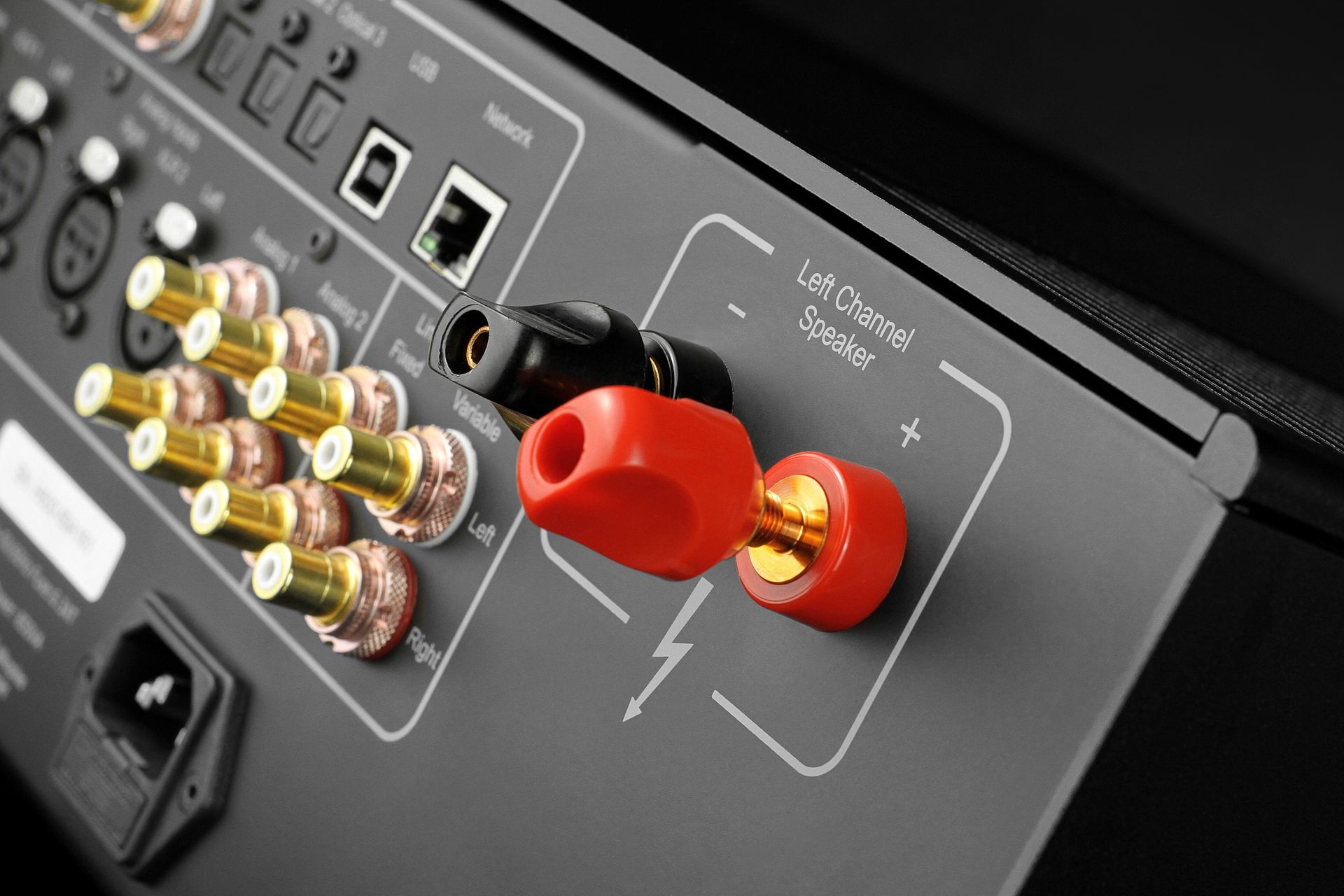
Other down-to-earth aspects include the binding posts and the possibilities for future system expansion. Most speakers have single or double sets of binding posts on the back to connect speaker cables. Here it is worth checking what kind of cables and plugs you intend to use and whether installing them will be as straightforward as you imagine. The simplest case is a single pair of posts and cables terminated with banana plugs. Red into red, black into black, done. With spades or bare wire runs it can be a bit trickier - especially in budget models where the posts are close together. A stray strand or a short circuit between posts can, in the worst case, kill the amplifier. If your speakers have double or triple binding posts, you will probably need to use the supplied metal jumpers or buy better ones. You can also experiment with bi-wiring or bi-amping. These are interesting options, but they are best left to users who already feel at home with the basics.
If you like to think ahead, you are probably already aware that the speakers you buy today will not be your last. At some point you will likely want to upgrade. That is another good reason to take this decision seriously instead of being guided purely by a tempting price. Paying a little more upfront for a more "future-proof" choice can pay off years later when you sell the speakers and recover a meaningful share of what you spent. In practice, this becomes one more piece in the puzzle - together with sound, looks, room and amplifier matching - that contributes to the feeling that this was a considered decision, not just for today but also with an eye on tomorrow. At this stage, most listeners arrive at the final and most important technical relationship in any stereo system - the match between speakers and amplifier.
Finding a perfect match between speakers and amplifiers
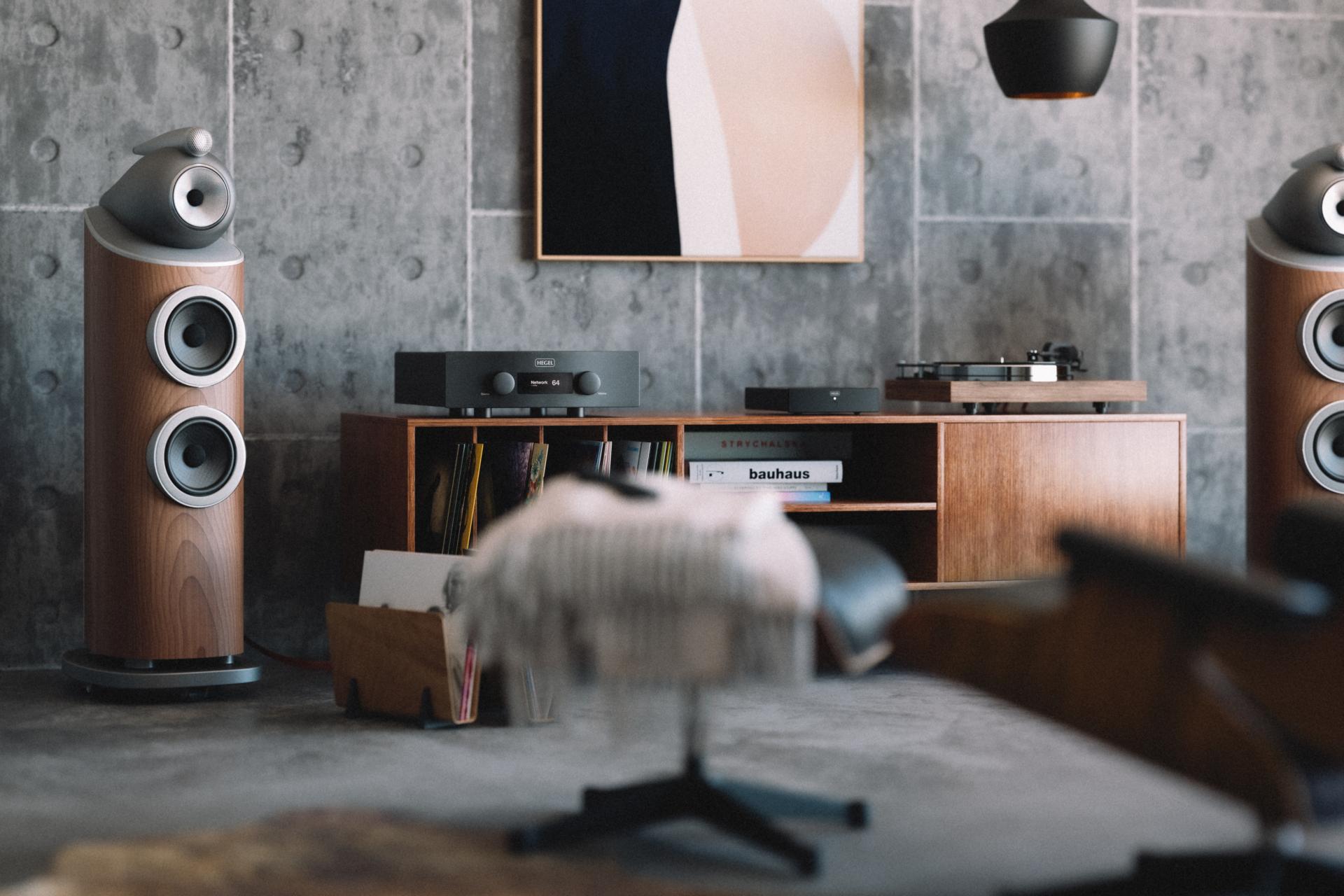
This is the question almost every hi-fi enthusiast asks at some point. Alongside matching the speakers to the size and acoustics of the room, getting the right partnership between speakers and amplifier is absolutely critical. If you get this combination right, you are rewarded with great sound and that elusive sense of synergy between the "engine" and the "wheels". If you get it wrong, the desired result will probably remain out of reach, no matter how much you spend on acoustic panels, silver cables, exotic isolation platforms or other accessories.
When you get to the amplifier-speaker interface, it is useful to start with a few simple dependencies. Now that you understand the basic parameters of speakers, you can look at the amplifier as the tool that has to keep everything under control - deliver enough current, keep the bass in check and avoid adding too much distortion along the way. If your speakers have low sensitivity and relatively low impedance - for example, 4 ohms and 85 dB - there is little point in pairing them with a delicate 10- or 15-watt tube amplifier. At realistic listening levels it will quickly run out of steam, heat up, clip and start producing hard, unpleasant sound. In extreme cases you risk damaging the speakers. At the opposite end of the spectrum, very efficient speakers - large horn systems or designs with sensitivity above 93-95 dB - can easily be driven by moderately powerful amplifiers. If you choose to combine such speakers with a very powerful amplifier, it is worth making sure that the volume control is extremely precise from the very first segment of its range. Otherwise, you may find that channel balance is off at low levels, and tiny movements of the volume knob make the system jump from too quiet to too loud.
A sensible first step is to compare the amplifier power recommended by the speaker manufacturer with the actual specs of the amp you are considering. That does not mean that if the speakers are 8 ohms and the recommended amplifier power is 50-100 watts, we must find an amp that is exactly 75 watts into 8 ohms. It is just guidance. In most cases it is wise to lean towards the upper end of the recommended range. If the recommended range is 80-200 watts and your amplifier delivers only 40, you are probably asking for trouble. The amp will likely start struggling and fail to show us what the speakers can really do. It's also worth remembering that power figures do not tell the whole story. A surround receiver rated at 100 watts per channel may not deliver anything close to that in real use, and even in stereo amplifiers the quoted number says very little about current delivery, power supply strength or headroom. Even with stereo amplifiers, the wattage number alone does not reveal everything. It tells us nothing about current delivery, power supply design, capacitor capacity or the kind of reserve that allows an amplifier to stay composed when the music suddenly demands more energy. This is why at Hegel we always assume more is better. A more capable amp gives us greater control, better dynamics and more headroom, while also reducing the risk that we will run into harshness or clipping when turning the volume up. And if you are afraid that the amplifier's power will blow your speakers through the roof, you can limit the volume in the on-board menu.
We did not pursue high power and current capabilities just for the sake of the numbers. A big part of the reasoning was to give our users as much freedom as possible when choosing speakers. See our integrated amplifiers, capable of driving most speakers on the market.
In search of sonic synergy
Beyond the purely electrical aspects, there is something just as important - sonic character. Specs are best treated as a safety filter that lets us weed out combinations that are clearly risky or nonsensical. Once that filter has done its job, we can start listening for synergy. What do we mean by that, and how do we get there? Hi-fi enthusiasts have many strategies, but the simplest one is to avoid obvious mistakes. Bright, analytical speakers combined with equally bright and dynamic electronics may be impressive at first, but after an hour the etched treble and relentless detail can become tiring. Conversely, mellow, soft-sounding speakers paired with an amplifier that further smooths and rounds off the sound can give us an easy-going, pleasant presentation that ultimately lacks energy, rhythmic clarity and attack.
A better approach is often to let one component gently compensate for the other - a lively, fast integrated amplifier with slightly more relaxed, smoother speakers, or a slightly laid-back amplifier with speakers that are a bit more forward. Tube amplifiers are particularly demanding in this context. They often have relatively low power and a strong sonic personality. With insensitive stand-mount speakers they can sound sluggish and lifeless. With efficient, easy-to-drive speakers they reveal their strengths - rich tone, a three-dimensional midrange, beautiful space. The opposite pairing can also work well - a powerful, dynamic, analytical solid-state amplifier with speakers that have a slightly warmer, more forgiving character.
There is, however, a third, more purist and in our view safer path - to choose components that are as neutral and universal as possible. This is not about playing it safe for the sake of it. A genuinely neutral amplifier will match a far wider range of speakers, and the risk of a bad combination is much smaller. Thanks to their high current capability and stability into low impedances, Hegel amplifiers work extremely well with the vast majority of sensibly designed loudspeakers, including those that enjoy a reputation for being "difficult". At the same time, their sound remains neutral, even-handed and orderly. A Hegel amplifier does not try to artificially warm or brighten anything. Its job is to show what the speakers can really do.
In practice, this means that having such an amplifier at the heart of your system, you can focus primarily on choosing speakers that fit your room and your preferences, instead of trying to find electronics that will "rescue" a compromised match. In a well-thought-out hi-fi system, the amplifier should act as the foundation. If it is neutral and does not try to force its own character onto the speakers, you can treat it as a transparent link in the chain. A Hegel amp should simply supply current, keep the woofers in check and avoid coloring the signal. The speakers are then free to decide whether the sound is lean or full, bright or dark, fast or relaxing. If the amplifier removes the worry about electrical compatibility from the equation, choosing speakers becomes "difficult" only in the sense that there are many attractive options. That is the kind of problem we do not mind having.
In the end, let your ears decide
At some point, even the best-prepared theory, spec sheets and hours of discussion about enclosure types have to step aside. The real decision happens when you sit down in front of a pair of speakers and press play. You can carefully match speaker size to room, analyze impedance graphs and read about cone materials and crossover topologies, but the answer to whether a given pair is "for us" only reveals itself when you listen.
The way you listen has a huge impact on the choices you make. A classic beginner's mistake is the "five-minute effect" - picking the speakers that impress us most in the first half a minute. They play louder, brighter, with more obvious bass, and for a short moment this feels like the clear winner. After two or three evenings at home, the same speakers may turn out to be simply fatiguing. A dealership demo should therefore be a calm test of how the system behaves over time, not a contest to see which one delivers the biggest "wow" in the first chorus. A good habit is to bring a few tracks you know very well - things you listen to often, not just perfectly recorded samplers. It helps to include a vocal-centric track, something with a big soundstage, a piece with strong bass and a quieter, more intimate recording that makes it easy to hear any colorations. Instead of jumping between tracks every fifteen seconds, it is usually better to listen to whole songs or at least substantial sections, on two or three pairs of speakers, at the same volume level.
If you use the same neutral, powerful amplifier throughout, life gets easier. You can assume that the differences we hear mainly come from the speakers and the room, not from the electronics handling one pair comfortably and the other less so. An amplifier with plenty of power and no strong sonic "agenda" acts like a magnifying glass. It lets us hear what each pair of speakers really brings to the table instead of masking their traits with its own limitations. At Hegel we produce amplifiers that sound neutral, transparent, and dynamic, delivering all the power you need without adding any coloration of their own. Our amplifiers are appreciated not only by music lovers, but also by industry professionals such as loudspeaker designers, dealers, and reviewers. On the one hand, they provide uninterrupted listening pleasure and don't treat any music genre as inferior, and on the other hand they are also a great tool for professionals who need to be sure that what they hear when comparing speakers, sources, or cables is true.
Listening to different systems in a store is often the most convenient option due to the large selection of devices, but if possible, the final stage of the process should always be the home trial. Even if everything seemed perfect during the dealer's demo, your own room and your daily routine can reveal a very different side of the same system. It is worth giving the speakers some time - both to position them properly and simply to let them play. New drivers can settle in over the first few dozen hours. The suspensions loosen up, the bass tightens, the whole presentation becomes more relaxed. There is no need to turn this into a ritual, but it is probably not wise to deliver a final verdict after the very first evening. A better approach is to live with the new speakers for several days - listen at different levels, to different genres, sometimes in the background, sometimes in full concentration. If, after a week, you still find yourself switching the system on "just for a moment" that turns into two or three albums, that is a good sign. If, on the other hand, you catch yourself looking for excuses to turn it off after a few tracks, something about the sound is likely bothering you, even if you cannot immediately put it into words.
In the end, a well-matched speaker-amplifier combination is not a checklist of all terms from the brochure, but a system you simply enjoy living with. One that doesn't have to prove anything in the first thirty seconds. It can play calmly, without shouting for attention, and still make you feel that, after a long day, you want nothing more than to walk through the door, switch on the amplifier, sit in your favorite spot and feel that everything is just right. That is why we do what we do at Hegel. We know what we expect from a hi-fi system and want to share that with others. We also understand how important it is to choose the right speakers. We cannot make that decision for anyone or point to a single model that will definitely be "the one", but we can make the whole process easier. If our stereo system is built on an amplifier that drives most sensibly designed speakers without effort and does not add strong colorations of its own, that is one less thing to worry about. Instead of wondering whether the electronics will "cope" with a given pair, with a Hegel amplifier we can focus on what truly matters - whether these are the speakers we want to spend our next evenings with, discovering new music and rediscovering old favorites. Regardless of which speakers you choose, we wish you just that.